Jubileus, part 1: a second brain in a folder
Jubileus is my second brain: notes, web clips, PDFs, decisions, journal. The whole thing is a folder of markdown files in a private git repo. On top of it sits one small MCP server, which means any AI app that speaks the protocol can read and write my vault mid-conversation. Claude can file an article I’m reading into the vault; days later, a different tool on a different machine can ask what I’ve read on a topic and get the exact file back.
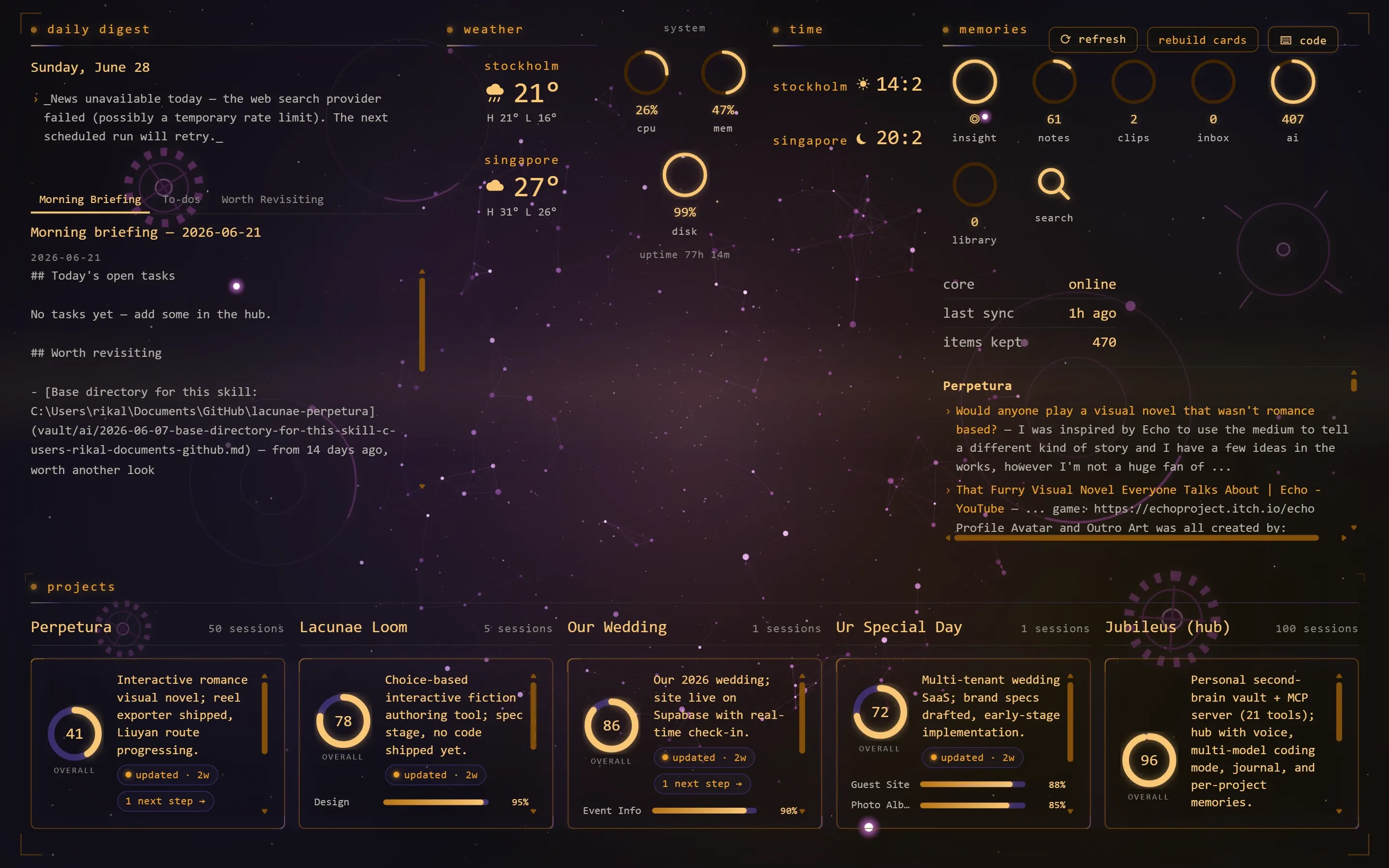
The hub, a localhost-only cockpit over the vault. Nothing depends on it; the files underneath stay plain markdown.
The first working version took one day: June 12. Vault scaffold, SQLite full-text search, web and PDF extractors, git sync, an MCP server with eight tools. By June 21 it had 21 tools and 710 commits. It costs zero per month. Git syncs between machines, the index lives locally on each one.
The one rule that paid for itself
Files are the source of truth. The SQLite index is derived, machine-local, and disposable. I wrote that sentence in the design spec before writing any code, and it kept being the reason things stayed easy: at least four features that would normally need a data migration needed nothing but “run reindex once.” When search got a connection graph, when entity pages landed, when journal entries became indexable, the answer was the same. Delete the database, rebuild it from the files, done.
The corollary: if Jubileus dies as a project, my notes are still a folder of readable markdown. No export, no lock-in, nothing to rescue.
Building it meant deleting half of it
The commit history is honest about scope creep. Mail integration: built, then removed. Calendar: built, then removed. Spotify panel, habit streaks, focus timer: built, then removed. Each removal has a dated entry in the dev log, and at some point the log itself calls the churn “the tell.” A second brain wants to become a dashboard for your whole life. Deleting the dashboard parts is what kept it a second brain.
I also evaluated three products that overlap with it: a memory SaaS, a multi-agent cloud framework, a voice-first assistant startup. I passed on all three, and wrote down the same reason each time: their headline features need the cloud, and this thing’s founding constraint is localhost, my files, zero dollars.
Part 2 is about the part of Jubileus that works while I sleep.